
When a home inspection reveals that an HVAC system fails, it can feel alarming—especially during a real estate transaction. Heating and cooling systems are expensive, essential, and closely tied to comfort, safety, and energy costs. A failed HVAC inspection doesn’t automatically kill a deal, but it does change the conversation between buyers and sellers.
What Does “Failing” an HVAC Inspection Mean?
A home inspector doesn’t usually “pass” or “fail” a house the way a test does. Instead, during an HVAC inspection, the inspector identifies defects, safety issues, or functional problems. An HVAC system is considered to have “failed” when the inspection reveals issues such as:
- Safety-related
- Not functioning properly
- Near the end of their usable life
- Non-compliant with codes or standards
- Likely to require immediate or costly repairs
These findings are documented in the inspection report and flagged for attention.
Common Reasons HVAC Systems Fail Home Inspections
System Is Not Operating Properly
This includes:
- Heating or cooling not turning on
- Weak airflow
- Uneven temperatures
- Short cycling (turning on and off rapidly)
Non-functional systems are one of the most serious inspection concerns.
Safety Issues Are Found
Safety problems can cause an immediate failure, such as:
- Carbon monoxide risks
- Cracked heat exchangers
- Gas leaks
- Faulty electrical connections
- Improper venting or exhaust
These issues raise red flags because they can threaten occupant health.
System Is Too Old or Near Failure
Inspectors often note:
- HVAC units past their expected lifespan
- Obsolete or discontinued equipment
- Signs of excessive wear or corrosion
While age alone doesn’t equal failure, old systems with visible issues often do.
Poor Installation or Code Violations
An HVAC system may fail if it was:
- Installed incorrectly
- Modified without permits
- Not compliant with current safety codes
- Lacking proper clearances or drainage
Even newer systems can fail due to improper installation.
Lack of Maintenance Evidence
Inspectors may flag systems showing:
- Dirty coils or filters
- Rust or moisture damage
- Neglected components
This suggests future reliability issues—even if the system currently runs.
What Happens Next for Buyers?
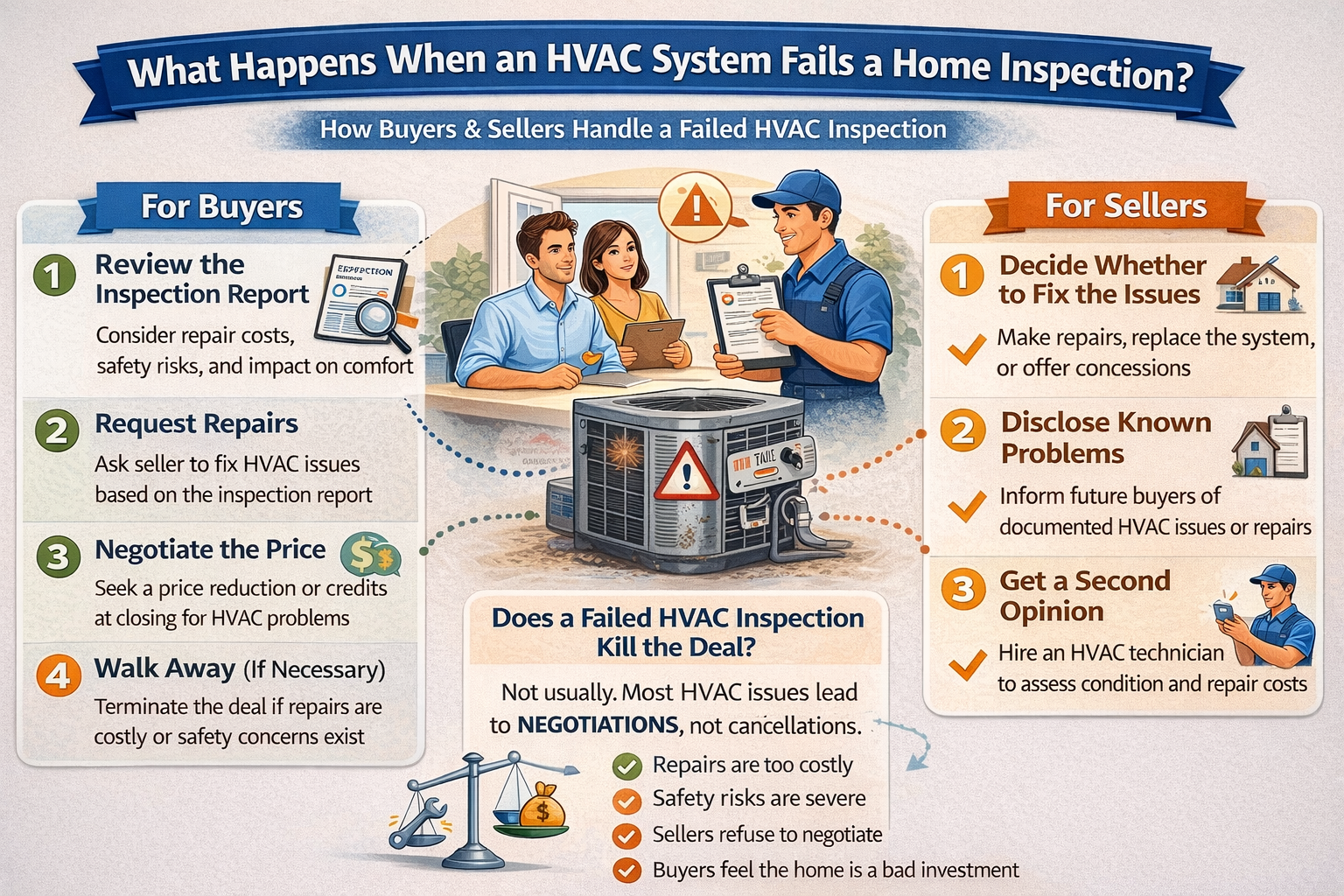
1. Buyers Review the Inspection Report
The HVAC findings become part of the buyer’s decision-making. Buyers typically focus on:
- Cost of repair or replacement
- Safety risks
- Impact on comfort and energy efficiency
This information helps buyers decide how to proceed.
2. Buyers Can Request Repairs
In many transactions, buyers can ask the seller to:
- Repair specific HVAC issues
- Replace failing components
- Hire a licensed HVAC technician for repairs
Requests are usually backed by the inspection report.
3. Buyers May Negotiate the Price
Instead of repairs, buyers may ask for:
- A price reduction
- Seller credits at closing
- An allowance to replace the HVAC system later
This is common when repairs are expensive or time-sensitive.
4. Buyers Can Walk Away
If the contract includes an inspection contingency, buyers may:
- Terminate the agreement
- Recover their earnest money
This often happens when the HVAC system poses serious safety or cost concerns.
What Happens Next for Sellers?
1. Sellers Decide Whether to Fix the Issues
Sellers may:
- Complete repairs before closing
- Replace the HVAC system
- Offer financial concessions instead
The decision depends on cost, timeline, and market conditions.
2. Sellers Must Disclose Known Issues
Once an HVAC problem is documented:
- Sellers are typically required to disclose it
- Future buyers must be informed
- Ignoring it can lead to legal issues later
Transparency protects sellers from post-sale disputes.
3. Sellers Can Get a Second Opinion
Sometimes sellers hire:
- A licensed HVAC contractor
- A specialized HVAC inspection
This can clarify whether issues are minor, overstated, or repairable.
Does a Failed HVAC Inspection Kill the Deal?
Not usually.
Most failed HVAC inspections lead to negotiations, not cancellations. Deals fall apart only when:
- Repairs are extremely costly
- Safety risks are severe
- Sellers refuse to negotiate
- Buyers feel the home is no longer a good investment
In many cases, HVAC issues are resolved before closing.
Repair vs. Replacement: What’s More Common?
Repairs Are Common When:
- Issues are minor
- System is relatively new
- Safety risks can be corrected
Examples include replacing capacitors, thermostats, or electrical components.
Replacement Is More Likely When:
- System is near the end of its lifespan
- Heat exchanger is cracked
- Major components have failed
- Repair costs approach replacement cost
HVAC replacement is often negotiated into the sale price.
Should Buyers Get a Separate HVAC Inspection?
Yes—especially when issues are found.
A licensed HVAC technician can:
- Provide detailed repair estimates
- Confirm safety concerns
- Assess remaining system life
- Help buyers make informed decisions
Home inspectors provide general findings, not in-depth diagnostics.
How to Avoid HVAC Inspection Problems
For Sellers
- Schedule a pre-listing HVAC inspection
- Fix known issues early
- Keep maintenance records
- Replace filters and clean components
Preparation reduces surprises and strengthens negotiating power.
For Buyers
- Review HVAC age before making an offer
- Ask about maintenance history
- Budget for future replacement if system is older
- Use inspection contingencies wisely
Being proactive prevents rushed decisions.
Conclusion
If an HVAC system fails a home inspection, it doesn’t automatically end the sale—but it does trigger important decisions. Buyers may negotiate repairs or price reductions, while sellers must choose whether to fix issues or adjust expectations. Safety problems and major system failures carry the most weight, but many HVAC concerns are manageable with proper planning.
Understanding the process helps both sides navigate inspections calmly, protect their investment, and move forward with confidence.
Discover more stories on purpose-driven leadership and community impact Buzz Mega.
