

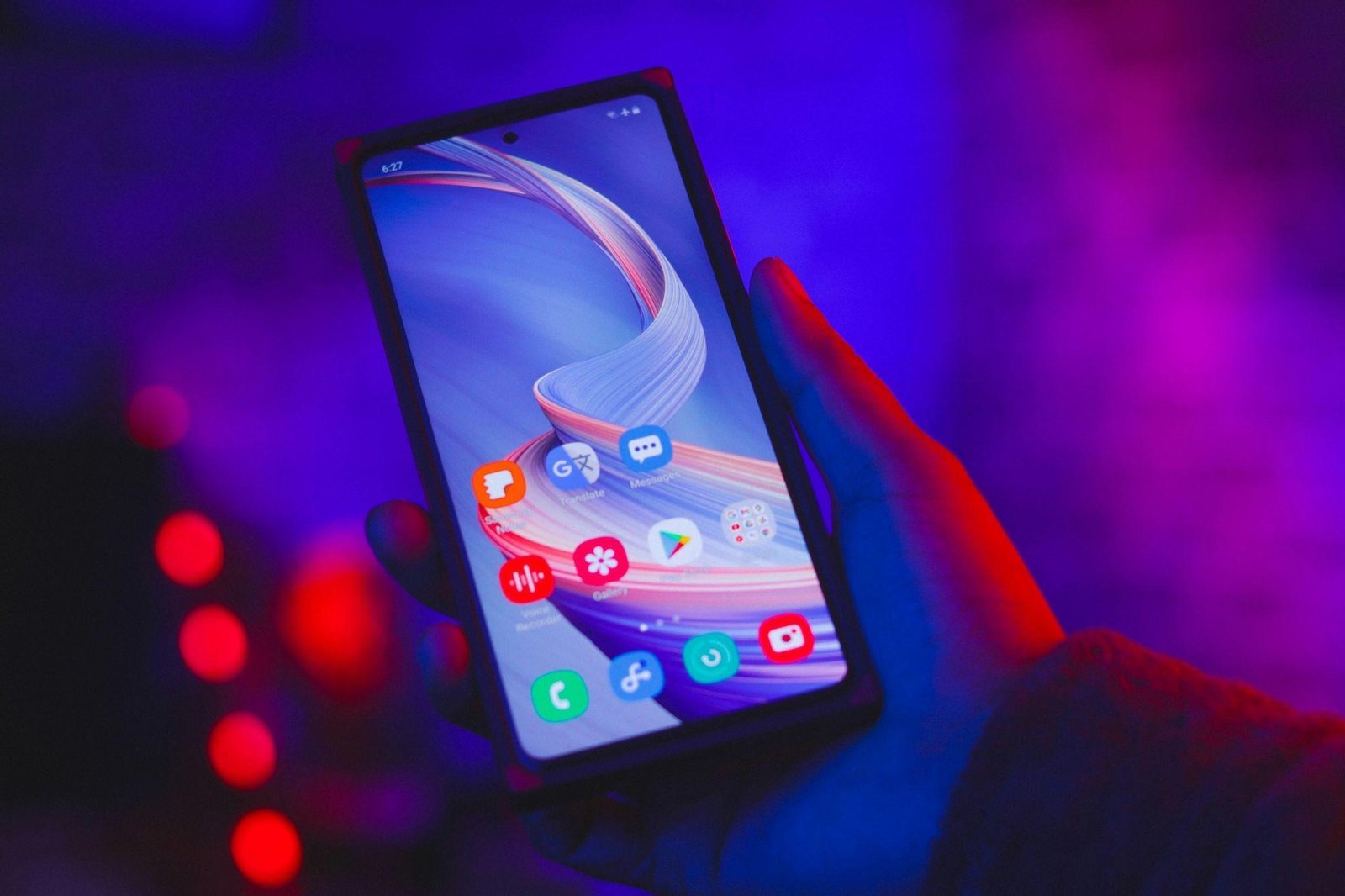
There was a time when mobile gaming meant simple puzzles, basic arcade titles, and games designed primarily to fill a few spare minutes. Dedicated consoles and PCs offered sophisticated experiences, while phones were treated as a completely separate and much more limited category.
That distinction has become increasingly difficult to maintain. Modern smartphones have powerful processors, high-resolution displays, advanced graphics hardware, fast wireless connections, and access to enormous game libraries. Developers have responded by creating increasingly ambitious mobile titles, while established gaming companies have brought major franchises to phones. The smartphone has evolved from a casual gaming accessory into a serious gaming platform.
Mobile Hardware Became Powerful Enough for Bigger Games
The biggest limitation on early mobile gaming was hardware. Small screens, limited memory, weak processors, basic graphics, and restrictive controls meant developers had to create games within very narrow technical boundaries. Simplicity was often a necessity rather than merely a design preference.
Modern smartphones operate in a completely different environment. Powerful mobile chips can handle complex 3D environments, sophisticated lighting, large numbers of on-screen objects, and demanding real-time calculations. High-refresh-rate displays on some devices can also make movement feel considerably smoother.
Storage has expanded as well. Mobile games can now occupy many gigabytes, allowing developers to include larger environments, extensive voice acting, high-resolution textures, and substantial amounts of content that would have been unrealistic on older phones.
These improvements do not mean smartphones have replaced dedicated gaming hardware. PCs and consoles still offer important advantages, particularly for demanding games. What has changed is the range of experiences that developers can realistically deliver on a device small enough to fit inside a pocket.
Gaming Now Happens Wherever the Phone Goes
Portability has always been the smartphone’s most obvious advantage, but improved hardware has changed what that portability means. Players are no longer limited to extremely simple games while travelling or waiting somewhere.
A phone can support competitive multiplayer titles, strategy games, RPGs, racing games, cloud gaming, puzzles, and numerous forms of casual entertainment. Someone can play a substantial game during a journey and later use the same device for streaming, social media, or digital activities such as mobile slots at mrQ.
This variety has helped blur traditional distinctions between categories of mobile entertainment. The device itself remains constant while the content can change completely within seconds.
Mobile games have also adapted to different lengths of play. Some are designed around short sessions, while others support hours of progression. A player can therefore choose something suitable for five spare minutes or settle into a longer session without changing hardware.
That flexibility gives smartphones an advantage that conventional gaming systems cannot fully reproduce: the gaming device is already with the user before the decision to play has even been made.
Mobile Gaming Has Become a Massive Global Market
The transformation of smartphones into gaming devices is reflected in the economic scale of mobile gaming. Newzoo estimated that mobile games would generate $103.0 billion in 2025, representing 55% of global games market revenue.
That scale has changed how the games industry treats mobile development. Phones are no longer merely secondary platforms for simplified versions of larger games. For many companies, mobile audiences represent an enormous market worth designing for directly.
Major franchises have consequently expanded onto smartphones, while games originally developed for mobile have become internationally recognizable entertainment brands in their own right.
The business models have evolved too. Premium purchases still exist, but free-to-play games supported by optional purchases have become widespread. Subscription services offer another approach, while advertising supports many casual titles.
These models have helped make mobile gaming accessible to an enormous audience, although they have also created debates around monetization, particularly when game design encourages frequent spending. As mobile games become more sophisticated, discussions about transparency and consumer protection have become more important alongside conversations about graphics and performance.
Better Controls and Connectivity Expanded What Phones Could Do
Touchscreens initially appeared to be one of mobile gaming’s biggest limitations. They work extremely well for certain genres but provide none of the physical feedback offered by buttons, triggers, analogue sticks, a keyboard, or a mouse.
Developers responded by designing interfaces specifically for touch. Strategy games can use taps and gestures naturally, while action games employ customizable virtual controls and increasingly sophisticated assistance systems.
Hardware accessories provide another option. Bluetooth controllers can turn a smartphone into something much closer to a portable console, while controller grips make longer sessions more comfortable. This allows developers to support games that would be awkward if touch controls were the only possibility.
Connectivity has been equally transformative. Faster Wi-Fi and cellular networks have made real-time multiplayer gaming practical in more situations. Players can compete or cooperate without being connected to a fixed home network.
Cloud gaming pushes this idea further by allowing some of the computational work to happen remotely. Instead of requiring the phone itself to render an entire high-end game, a server can run it and stream the resulting video to the device while receiving the player’s inputs.
Connection quality remains critical, but the concept further weakens the relationship between the physical power of a device and the complexity of the games it can potentially access.
Smartphones Are Developing Their Own Gaming Identity
Mobile gaming was once frequently described in comparison with other platforms. Games were judged by whether they could approximate a console experience or whether their graphics looked surprisingly good “for a phone.” That perspective is becoming less useful.
Smartphones have characteristics that make them distinct gaming devices. Touchscreens enable controls that conventional consoles do not naturally offer. Cameras, motion sensors, GPS, microphones, and persistent internet connectivity can become part of gameplay. Notifications and portable access allow games to operate around different patterns of daily activity.
Cross-platform gaming has also weakened boundaries. In some titles, smartphone players can share progression or even play directly with people using consoles and PCs. The game becomes the central experience while the hardware becomes a choice based on circumstances.
There are still compromises. Small screens are not ideal for every genre, battery life limits extended sessions, thermal management can affect demanding games, and touch controls cannot always match physical inputs. Those limitations explain why dedicated gaming hardware remains relevant.
But being different from a console does not make the smartphone an unserious gaming device. Its enormous audience, increasingly capable hardware, substantial game libraries, accessory support, and connectivity have established mobile gaming as a major part of the industry.
The transformation happened gradually enough that it can be easy to overlook. Phones moved from simple built-in games to downloadable apps, then to sophisticated online titles, competitive gaming, controller support, and console-scale releases.
Today, the question is no longer whether smartphones can function as serious gaming devices. They already do. The more interesting question is how much further mobile hardware, cloud technology, and game development will push the format in the years ahead.
