
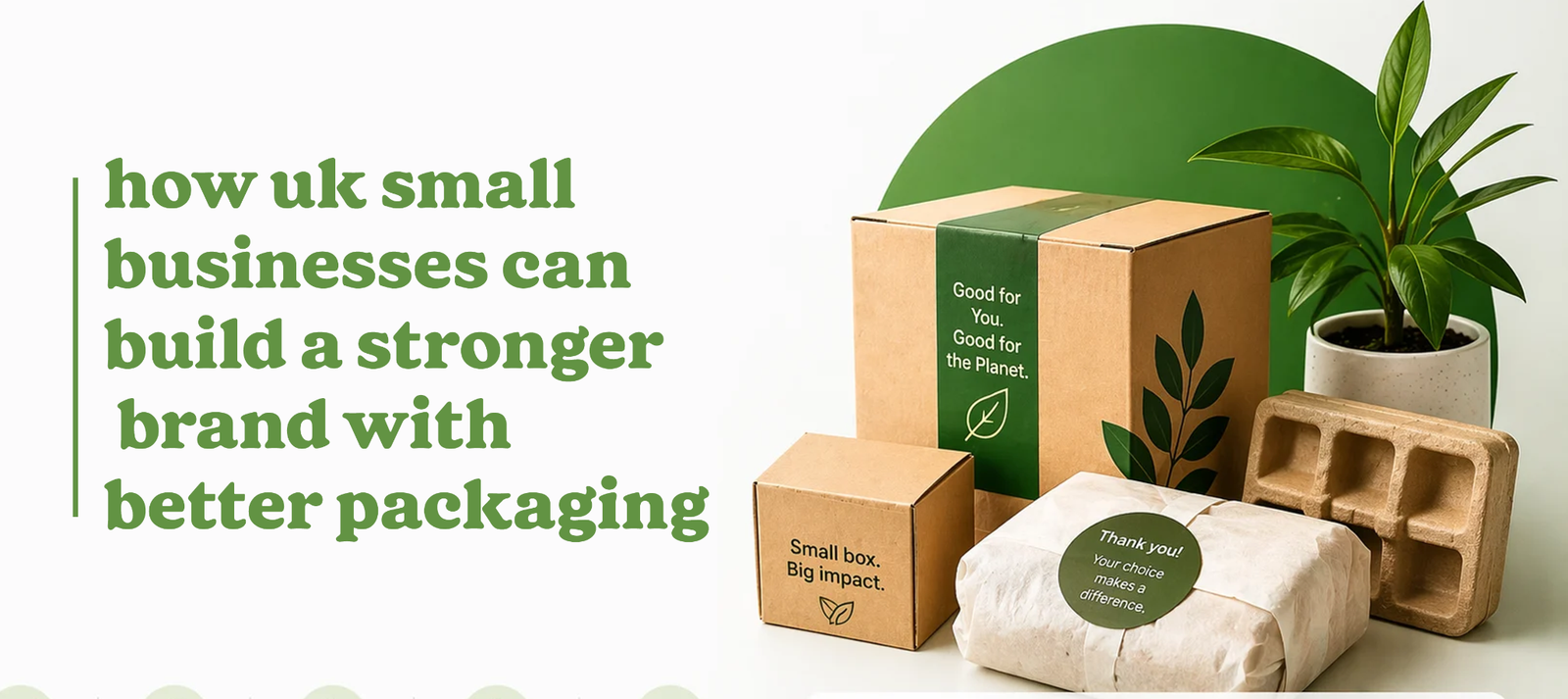
For a small business, branding is not limited to a logo, website or social feed. The moment a customer receives, carries or opens a product is also part of the brand experience. Packaging gives a growing company a physical way to communicate quality, personality and reliability without paying for another advertising placement. The challenge is to make every design choice work hard: the box must protect the product, fit the budget, support fulfilment and still look recognisably yours. A clear packaging system can make a young business appear more established while giving customers a reason to remember the name behind the product.
Treat the box as a brand touchpoint
Customers may see a parcel before they revisit a website or open a marketing email. Use the outer box, label, tape and opening sequence to repeat a small set of brand cues so the experience feels deliberate rather than improvised. This matters because packaging performance is judged in use, not in a design file. Create a short checklist covering dimensions, material, artwork position, assembly and acceptance criteria, then use the same checklist for samples and deliveries.
Create consistency across every order
Businesses comparing Custom Boxes UK should begin with consistent logo placement, colour use, typography and tone of voice. A simple artwork guide prevents each box size or product line from looking as though it belongs to a different company. The practical value appears when the rule can be repeated across normal orders. Ask the team that packs, stores, displays or returns the product to review the proposal before production, because small practical issues are easiest to solve at sample stage.
Choose a structure that matches the product
The most attractive artwork cannot compensate for a weak or badly sized box. Select a board grade and closure style that suit the product weight, fragility, storage conditions and delivery method, then remove unnecessary empty space. A useful way to control the decision is to turn it into a measurable specification. Compare at least two realistic options using the same packed product and sales channel. Record the effect on protection, labour, storage, presentation and total cost.
Use print hierarchy instead of visual clutter
A professional pack gives each message a clear priority. The brand name should lead, essential product information should be easy to find, and secondary copy should support the story without competing for attention. The strongest result comes from combining design intent with operational reality. Prototype the complete pack and observe how a person uses it without explanation. Any hesitation, movement or confusion should become a design action before the order is approved.
Make unboxing simple and memorable
Good unboxing is not about adding layers for the sake of drama. It is about a smooth sequence: easy opening, tidy product presentation, clear instructions and a small moment of personality such as an inside message or branded card. For a growing business, repeatability is as important as the first visual impression. Keep an approved physical sample and a written specification. These references make it easier to maintain quality when volumes increase, artwork changes or another supplier is considered.
Reserve premium formats for the right products
For flagship launches, subscriptions or high-value gifts, Custom Rigid Boxes UK can create a stronger sense of permanence and care. Use rigid construction selectively where the perceived value and reuse potential justify the additional cost and storage space. This is also where a clear supplier brief can prevent avoidable cost and inconsistency. Set a review date after launch and use customer comments, damage records and packing observations to decide whether the feature should be retained, simplified or strengthened.
Measure whether packaging is strengthening the brand
Track damage, returns, repeat orders, customer comments and user-generated content after a packaging change. The best design is not simply the one the owner likes; it is the one that improves recognition and commercial performance. Treat the decision as part of the wider product and customer journey rather than an isolated print choice. Avoid changing several variables at once. A controlled test makes it easier to understand whether the structure, print, insert or message caused the improvement.
Build a packaging guide for growth
Document approved colours, logo clear space, type sizes, materials, closures and insert placement in a simple guide. This does not need to be a large brand manual. A few pages can help a designer, printer or new team member reproduce the same experience. It also makes future quotations easier to compare because suppliers are working from the same standards. As the range expands, add rules for which details are fixed and which may change by product category or season.
Common Mistakes to Avoid
Avoid treating each new product as a separate branding project. Frequent changes to colours, logo size and box style make recognition harder and create unnecessary artwork work. Do not select a premium board before checking storage, fulfilment and postage implications, and do not add inserts that slow packing without improving protection. Another common mistake is approving artwork only on screen; physical colour, scale and texture can change the impression. Finally, do not assume customers value every decorative detail. Ask what they noticed and use that feedback to protect the elements that genuinely strengthen the brand.
A Practical Next Step
Choose one representative product and turn the recommendations in this article into a one-page packaging brief. Include the packed dimensions, product risk, sales channel, required messages, target order quantity and the customer experience you want to create. Ask a supplier for a structural sample and a clearly itemised quotation, then test the complete pack with the people who will store, assemble and receive it. This small controlled project provides evidence before the approach is extended across the wider range.
Conclusion
Better packaging helps a small UK business look coherent, dependable and ready to grow. Start with the basics: a structure that protects the product, a consistent visual system and an opening experience that respects the customer. Premium details should be added only when they support the brand promise and the economics of the order. When packaging decisions are documented and measured, each new product can join the same recognisable family instead of creating a new design problem from scratch.
Frequently Asked Questions
How much branding should appear on a small business box?
Use enough branding for quick recognition, but avoid covering every surface. A logo, one supporting colour, a short message and clear product information are usually more effective than a crowded design.
Is custom packaging worthwhile for a new business?
It can be, especially when the box improves fit, protection or presentation. New businesses can control risk by starting with one versatile size, digital print or branded labels before ordering a wider range.
What should be tested before a full packaging order?
Test product fit, closure strength, label adhesion, print legibility and the complete opening experience. For shipped items, also run practical drop and movement tests using the intended inserts and courier method
