

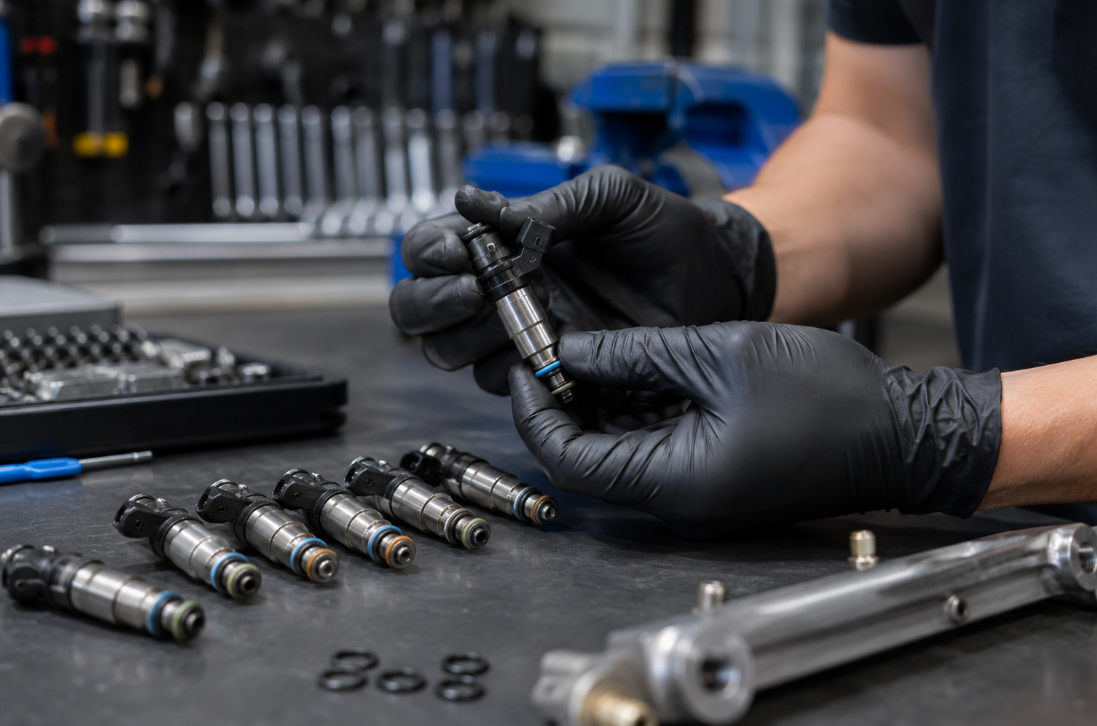
Most engine problems that get blamed on bad gas, old spark plugs, or “just age” trace back to fuel delivery. An injector that sprays 4 percent lean on one cylinder will not throw a check engine light, but it will rob power, foul plugs unevenly, and slowly wear a piston harder than its neighbors. That gap between “running” and “running right” is where quality Automotive Injectors earn their keep, and it is also where the industrial suppliers behind them quietly do their most important work.
Flow Matching Is the Detail Most Buyers Skip
A set of injectors can all pass a basic spray test and still deliver noticeably different volumes of fuel. Flow matching solves this. Each injector is bench-tested, measured, and grouped with others that flow within a tight tolerance of one another, often 1 to 2 percent. For a stock daily driver, that consistency means smoother idle and better mileage. For a turbo build or a rebuilt marine engine, it can be the difference between a reliable tune and a melted piston. Reputable parts suppliers publish or verify these numbers rather than shipping injectors straight from a bin.
OEM Remanufacturing Beats Bargain Replacements
The market is full of low-cost injectors that look identical to originals from Bosch, Denso, or Siemens Deka but use unproven internals. Remanufactured OEM units take a different path. The original body, built to factory specification, is ultrasonically cleaned, fitted with new filters, seals, and pintle caps, and then flow-tested before sale. The result costs less than a new dealership part and outlasts most generic copies. Specialist remanufacturers, including small New England operations that sell direct with no distributor markup, have built entire businesses on this process because it works.
Signs of a Supplier Worth Ordering From
Not every parts vendor treats injectors as precision components. A few things separate the serious ones:
- Published flow data or flow-matched sets, not just part numbers
- Rebuild kits, pigtails, rail clips, and spacers stocked alongside the injectors themselves
- Coverage across gas, diesel, and marine applications, from Powerstroke trucks to Mercury and Sea-Doo engines
- Verified customer reviews in the thousands, not dozens
Suppliers that carry supporting components tend to understand the full fuel system, which shows in the advice they give and the quality they hold their inventory to.
The Rebuild Kit Deserves Equal Attention
Injectors rarely fail all at once. O-rings harden, microfilters clog, and pintle caps wear long before the solenoid gives out. A quality rebuild kit restores an original injector for a fraction of the replacement cost, which is why DIYers, independent mechanics, and marinas keep them on the shelf. The catch is fitment: seals and filters vary by brand and generation, so the kit needs to match the exact injector family.
Fuel delivery is one of the few systems where a $30 part decides whether a $10,000 engine thrives. Buyers who treat injectors as precision instruments and source them from suppliers who do the same tend to keep their engines running strong for years.
